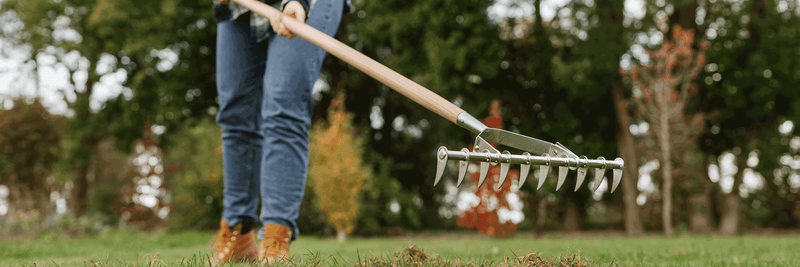
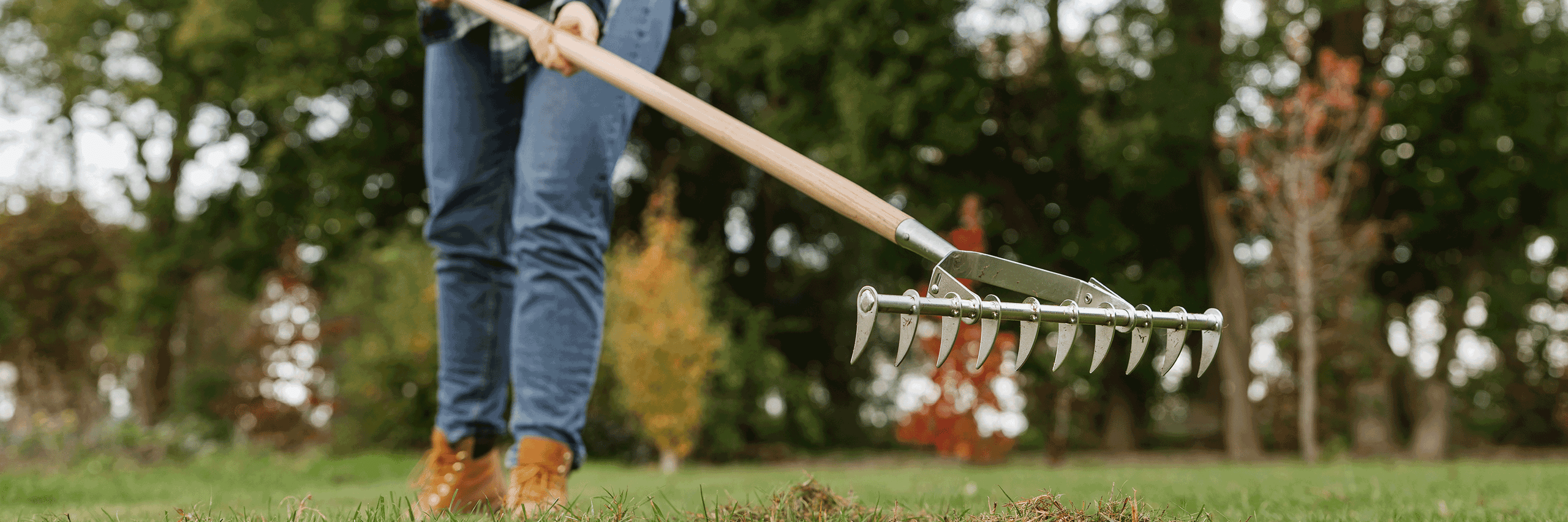
Scarifying is an important part of lawn maintenance, no matter the size of your garden. It helps improve your lawn’s overall health by removing built-up thatch, moss, and dead grass. By clearing this layer away, scarifying improves airflow and allows water and nutrients to reach the soil more easily, encouraging the growth of a thicker, healthier, greener lawn.
What Is Lawn Scarifying?
Lawn scarifying is the process of removing surface debris such as moss, dead grass, and thatch from your lawn. Over time, this material builds up and prevents water, air, and nutrients from reaching the grass roots, leading to weak or patchy growth. Regular scarifying helps rejuvenate your lawn and creates the ideal conditions for strong, healthy grass growth.
Why You Should Scarify Your Lawn
Scarifying your lawn offers several key benefits, including:
- Improving airflow to the soil
- Allowing better access to water and nutrients
- Removing moss, thatch, and dead grass
- Encouraging healthier, more vigorous lawn growth
It’s a simple but effective way to keep your lawn looking its best throughout the year.

How to Scarify Your Lawn Properly
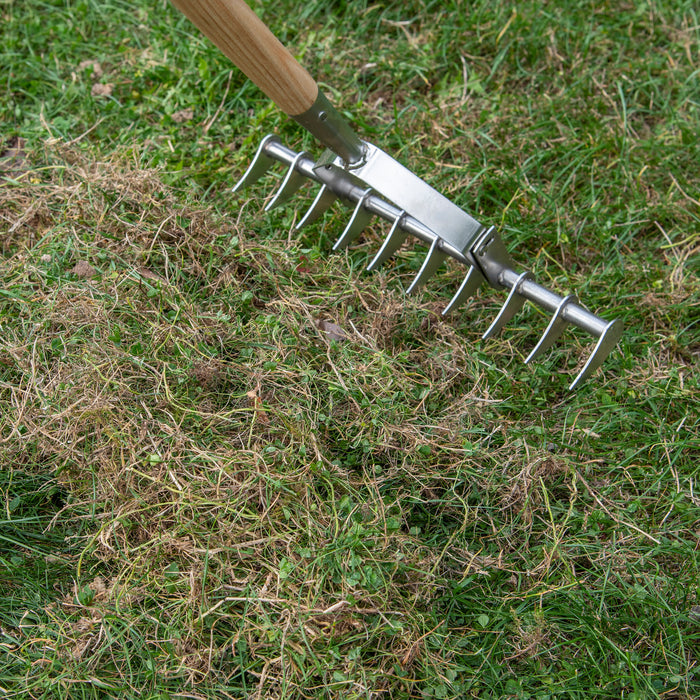
Using the right tool makes scarifying far easier and more effective. The Kent & Stowe Scarifying Rake features a long ash handle for comfortable use and an oscillating head fitted with 10 stainless steel tines, making it ideal for lifting and removing surface debris.
How to Use a Scarifying Rake
To scarify your lawn:
- Use a firm pull action across the lawn surface
- Work in straight lines to evenly remove thatch and moss
- Continue until the surface debris has been lifted away
You may be surprised by how much material is collected, even from a small lawn. This is completely normal.
What to Do With Lawn Thatch and Moss
Once removed, the thatch and moss can be:
- Added to your compost heap
- Disposed of via your local green waste recycling
There’s no need to waste it.

When to Scarify Your Lawn
Timing is important when scarifying to avoid damaging healthy grass.
When to Scarify a Lawn in Spring
For early-season moss removal and to encourage strong spring growth, scarify your lawn in early spring. If moss is present, it’s best to treat it before scarifying to help prevent further spread later in the season.
When to Scarify a Lawn in Autumn
Scarifying can also be carried out in autumn. This helps:
- Create space for existing grass to grow
- Reduce moss growth over winter
- Make lawn care easier the following spring
Autumn scarifying helps keep your lawn healthy year after year.